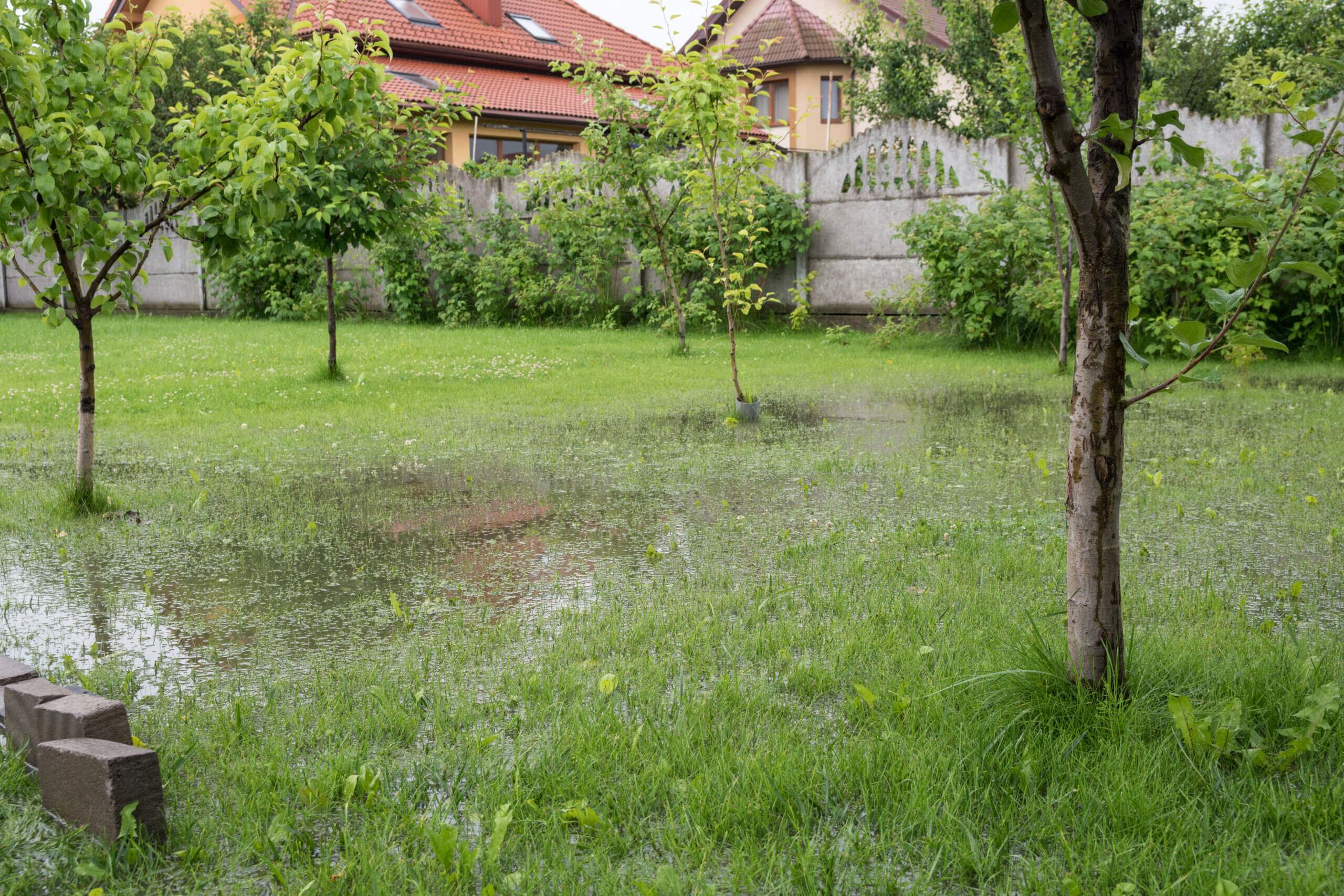
Rainy days are no fun when you have a wet yard. Standing water can ruin your grass, attract pests, and create a breeding ground for mosquitoes. Soil erosion and foundation damage are also possible if water isn’t draining properly from your property. If your yard is constantly wet and soggy, it might be time to consider some water drainage solutions.
While dry wells are a common solution to yard drainage issues, there are several other effective options available. These backyard drainage solutions can help you take control of the water on your property and make the most of those sunny days. With a little bit of planning, you can take steps to improve the drainage in your yard and protect your home from water damage.
Here are four options to consider when you’re looking for ways to solve your drainage problems:
1. Install a French Drain System
A French drain is a great way to redirect water away from your home and improve the drainage in your yard. It’s a ditch with a perforated pipe that is installed underground to move water away from an area. The trench is filled with gravel or small stones, which allows water to enter the pipe while keeping soil and debris out.
A French drain system can be installed around the perimeter of your property or in specific problem areas to prevent water from pooling and causing damage. It also has several other benefits, including:
- Cost-effective: A French drain is a relatively inexpensive solution for poor drainage. The cost will depend on the size of your property and the amount of digging that is required.
- Saves time and money: By redirecting water away from your home, you can avoid costly yard repairs from water damage. It also saves time and effort spent on yard maintenance, as you won’t have to deal with as much mud and standing water.
- Low maintenance: Once a French drain is installed, there is very little upkeep required. You may need to periodically check the ditch to make sure it is free of debris, but otherwise, it will require no special care.
- Long-lasting: French drains are a durable solution that can last for many years. With proper installation and maintenance, they will continue to work effectively for a long time.
- Aesthetically pleasing: Since these drains are installed underground, they won’t impact the appearance of your yard. They are also covered with small rocks that can blend in with your landscaping.
2. Install a Yard Drain To Catch Excess Surface Water
A yard drain, commonly known as a catch basin, is typically used to direct runoff water away from buildings and landscapes, preventing flooding and soil erosion. Yard drains can be made from a variety of materials, including concrete, plastic, and metal. They are often placed along the perimeter of a property and may be connected to an underground piping system that carries water away from the property.
Many homeowners choose to install yard drains, especially in places where heavy rains and snow melts are common. This is because heavy rainwater can quickly overwhelm gutters and downspouts, causing water to pool around the foundation of your home. Snow melts are also a major concern due to snow mold that can form on saturated ground or lawns. These molds appear white or gray and can damage the grass in your yard.
Installing a yard drain is one of the yard drainage solutions that will not only protect your home from water damage but you will also be able to keep your yard looking green and healthy.
3. Regrade Your Backyard
While having a flat backyard may seem like the ideal situation, it can actually lead to drainage problems. When rain falls on a flat surface, it has nowhere to go but to pool in the lowest areas. This can create large puddles that are difficult to drain and may lead to flooding.
One way to improve the drainage in your yard is to regrade it so that it slopes away from your home. This will allow water to run off of your property rather than pooling in your yard.
You can regrade your backyard yourself with some simple tools, but it’s best to consult with a professional to ensure that it’s done properly. Grading your backyard requires accurate measurements and calculations to create a slope that will effectively drain water away from your home. The process of regrading your background includes:
- Determine the slope of your yard: This is done by measuring the distance from your home to the lowest point in your yard. The goal is to create a slope of at least 6 inches for every 10 feet.
- Mark the high and low points of the yard: Once you know the slope of your yard, you can mark the high and low points with spray paint or flags to help you visualize the grade.
- Excavate the low points: Using a shovel or excavator, dig out the low points of your yard to create a slope. Be sure to remove any roots or rocks that could impede water flow.
- Install drainage if necessary: This is especially helpful if your yard is subject to flooding, you may need to install a drainage system to help carry water away from your home and ensure proper drainage.
- Begin regrading your yard: Once you have an estimate of the amount of dirt you need to incline your yard, you can now order the necessary amount of topsoil or fill dirt. You can then begin to regrade your yard by spreading the dirt evenly over the area you need to raise.
- Finish up by planting grass seed or sod: Regrading your yard will leave it bare, so you’ll need to replant grass seed or lay down sod to give your yard a finished look.
4. Plant Moisture Absorbing Plants
Any gardener knows that too much moisture can be just as harmful to plants as not enough. Excess water can cause root rot, fungal growth, and a host of other problems. Wet conditions are also often ideal for mosquito breeding, which can spread disease. This is why it’s important to choose plants that are able to tolerate damp or wet conditions.
Moisture-absorbing plants are a great option for homeowners with wet yards. These plants have deep roots that help to absorb water available for evaporation, resulting in a drier yard. This also implies that you’re not only contributing to clean air but are also doing your bit to save waste water. These plants are both beautiful and low maintenance, perfect for busy homeowners who don’t have the time to constantly take care of their yards.
Furthermore, they can help minimize the risk of soil erosion because their roots help to hold the soil in place. Planting moisture-absorbing plants will not only improve the curb appeal of your home but will also help to keep your yard healthy and dry.
Some of the best moisture-absorbing plants include:
- Primrose
- Daylily
- Swamp milkweed
- French rose
- Golden club
- Red elderberry
- Japanese iris,
- Globeflower
- Bigleaf hydrangea
- Common winterberry
- Bee balm, etc.
Conclusion
A wet yard can be a nuisance for any homeowner. Fortunately, there are a few drainage solutions that can help to alleviate the problem. By installing a French drain system, yard drain, or regrading your backyard, you can help to improve the drainage in your yard and make it a more enjoyable space. Additionally, planting moisture-absorbing plants can also help to absorb excess water and keep your yard dry. Although all of these solutions can be done DIY, we recommend leaving it to the professionals for the best results. A professional landscape company will have the experience and knowledge to properly install any drainage solution according to your yard’s specific needs and the location of your home.
So, if you’re unsure which of these solutions is best for you, or if you have questions about other possible solutions, please don’t hesitate to contact B&H Landscaping Services for assistance. We are experts in helping homeowners with landscape problems in Nashville, TN, and we only use high-quality materials to ensure that your drainage solution will last for years to come. We will conduct a thorough analysis of your land and come up with the best plan to address your flooding issue. We understand that each yard is different, so we tailor our services to meet your individual needs. Contact us today to schedule a consultation!